


Aug 15, 2026
Orthodontist vs Dentist: What's the Real Difference, and Who Should Do Your Invisalign®?
Choosing between a dentist and an orthodontist for teeth straightening is not always obvious. Both work with teeth, both can use clear aligners, and both care about healthy smiles. Yet the training, daily focus, and scope of practice are different, and those differences matter for predictability, facial harmony, and long-term stability.
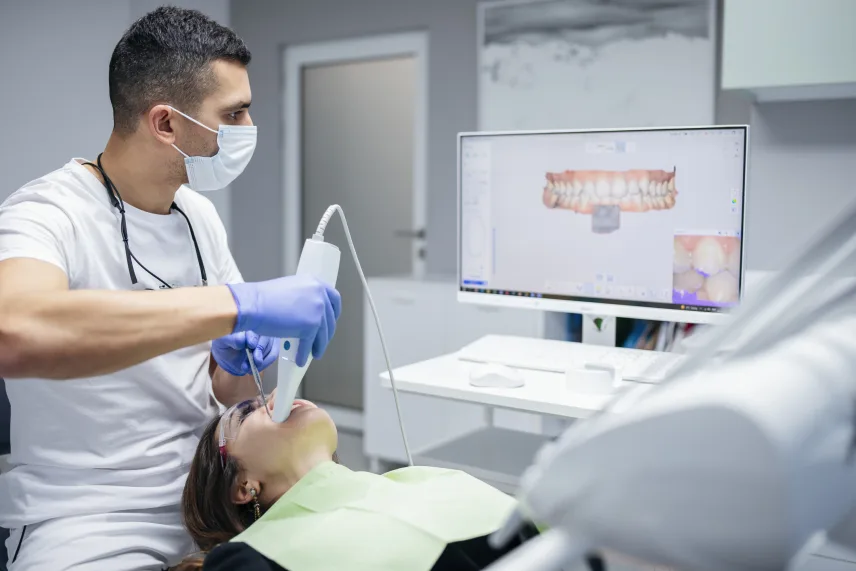
This guide explains how dentists and Specialist Orthodontists train, what each does clinically, and how to decide who should plan your Invisalign® treatment. You will also learn how to verify specialist credentials and what supervised Invisalign® by a Specialist Orthodontist looks like from start to retention.
If you prefer discreet options with fewer in-person visits, you will see how specialist oversight pairs with modern tools like remote check-ins to keep treatment convenient without losing clinical precision.
Dentist vs Specialist Orthodontist: Training and Scope
General dentists complete a dental degree and provide comprehensive oral care, including check-ups, fillings, crowns, gum health, and cosmetic treatments. Some complete short courses in orthodontic techniques such as clear aligners.
A Specialist Orthodontist first qualifies as a dentist, then undertakes several years of full-time, postgraduate specialty training focused solely on tooth movement, bite correction, jaw relationships, growth, and orthodontic biomechanics. In the UK, that training culminates in specialty examinations and inclusion on the General Dental Council Specialist List in Orthodontics.
The core difference is depth and focus. Orthodontists study how to move teeth safely within bone, protect roots and gums, diagnose complex bites and jaw discrepancies, and design mechanics that deliver stable results.
Why Many Dentists Offer Invisalign®
Clear aligner systems are designed to be user friendly, with digital planning software and manufacturer support. After introductory courses, a dentist can provide aligners for suitable cases. This is helpful for mild crowding or small cosmetic changes when bite relationships are already healthy.
However, aligners are tools, not treatment plans. The predictability, bite finish, and facial balance depend on diagnosis and biomechanics. Where movement is more than a simple alignment, specialist planning becomes the difference between a quick cosmetic tidy-up and a stable, healthy outcome.
What Specialist Orthodontists Add to Aligner Care
Specialist Orthodontists bring advanced diagnosis and precise control of movement. That includes:
- Full assessment of jaw relationships, airway and growth patterns, gum and bone health, and tooth root position.
- Appliance choice beyond aligners when needed, including fixed braces, ceramic options, lingual braces behind the teeth, and functional appliances for growing patients.
- Biomechanics planning that stages movements safely, manages anchorage, controls torque and root positioning, and finishes the bite to protect teeth, joints, and gums.
- Long-term retention planning to maintain results.
Specialist oversight reduces avoidable refinements, protects dental tissues, and typically lowers the risk of retreatment caused by incomplete bite correction or unplanned relapse.
When to Choose a Specialist Orthodontist
A dentist-led approach can suit:
- Minor crowding or spacing with a good bite and healthy gums
- Relapse after past orthodontics where only small corrections are needed
- Simple aesthetic tweaks before a cosmetic procedure, coordinated with your dentist
Choose a Specialist Orthodontist when you have:
- Moderate to severe crowding or spacing
- Deep bites, open bites, or crossbites
- Protrusive front teeth or jaw discrepancies
- Tooth wear, recession, or a history of gum issues
- Impacted or missing teeth, or planned implants/veneers that need space design
- A goal of maximising facial harmony and long-term stability
In these situations, specialist planning protects roots and gums, aligns the smile with facial features, and finishes the bite for comfort and durability.
What "Supervised Invisalign® by a Specialist Orthodontist" Looks Like
Supervised Invisalign® involves far more than a box of trays. A typical pathway with Specialist Orthodontist Dr Devesh Shelat (Dr Dev) includes:
Precision staging
Digital scans guide a bespoke sequence so each tooth moves in a controlled order with safe forces.
Attachments
Small, tooth-coloured shapes bonded temporarily to help aligners grip and deliver planned biomechanics.
IPR
Careful interproximal reduction creates fractions of a millimetre of space where needed to relieve crowding without extractions when appropriate.
Elastics or auxiliaries
Used when bite correction requires additional control.
Refinements
Planned checkpoints with additional aligners if micro-adjustments are needed for an excellent finish.
Retention
A fixed retainer, removable night-time retainer, or both, with guidance on long-term wear and monitoring.
Remote Dental Monitoring can reduce some in-person appointments while keeping expert eyes on progress between visits.
If you are exploring discreet options in Cheshire, you can read about aligners and other choices with Dr Devesh Shelat at our Knutsford clinic. You will also find details on subtle alternatives such as ceramic options and a full overview of fixed appliances on our braces page.
Verifying Specialist Credentials
In the UK, a Specialist Orthodontist is listed on the General Dental Council Specialist List in Orthodontics. You can:
- Ask for the clinician's GDC number and check their specialist status on the GDC website.
- Look for clear use of the protected title "Specialist Orthodontist" in clinic materials.
- Confirm who plans and delivers your treatment personally, not just who oversees it on paper.
At Cheshire Orthodontics in Knutsford, treatment is planned and delivered personally by Specialist Orthodontist Dr Devesh Shelat from start to finish.
Risks of Orthodontics Without Specialist Planning
Most aligner journeys are safe when planned well, but insufficient diagnosis and biomechanics can lead to:
- Incomplete correction of the bite, leaving teeth or joints under strain
- Root resorption risk if forces are poorly controlled
- Gum recession or black triangles if space and angles are mismanaged
- Unintended tooth tipping instead of true bodily movement
- Relapse and the need for retreatment due to weak retention planning
Specialist-led treatment focuses on tooth health, gum support, root positioning, and a bite that fits your face and lifestyle, not just the front view.
Can a Specialist Orthodontist Treat Me Discreetly with Invisalign®?
Yes. Specialist Orthodontists use Invisalign® and other advanced aligners for many adults and teenagers who want near-invisible treatment. Where aligners alone are not ideal, options such as lingual braces behind the teeth provide genuine invisibility with powerful control.
Quick FAQ
What is the real difference between an orthodontist and a dentist?
Dentists provide general dental care. Specialist Orthodontists complete several additional years of focused training in tooth movement, bite correction, jaw growth, and biomechanics, and are listed on the GDC Specialist List in Orthodontics.
Why can dentists offer Invisalign®?
With manufacturer training, dentists can provide aligners for suitable cases. Aligners are tools; outcomes depend on diagnosis and biomechanics.
When should I choose a Specialist Orthodontist?
Choose specialist care for moderate to complex crowding, bite problems, jaw discrepancies, tooth wear, gum concerns, or when seeking the most predictable, stable result.
How do I verify specialist status?
Ask for the GDC number and check the Specialist List in Orthodontics; confirm who plans and delivers your treatment.
What are the risks without specialist planning?
Potential bite imbalance, root and gum issues, incomplete movements, and higher relapse risk.
Can I still have a discreet result with a specialist?
Yes. Specialists routinely use Invisalign® and, when indicated, lingual or ceramic options to keep treatment subtle.
Next Steps
If you want a confident, discreet result with specialist oversight, book a free virtual consultation with Specialist Orthodontist Dr Devesh Shelat at Cheshire Orthodontics in Knutsford. You will receive a calm, detailed assessment with photos and a 3D scan, plus a personalised plan that fits your goals and schedule, with remote check-ins available to keep treatment on your terms.
BackWHO ELSE WANTS A NEW SMILE?

BOOK YOUR FREE CONSULTATION
Enter your details below to book a free consultation with Dr Dev Orthodontics in Cheshire today.